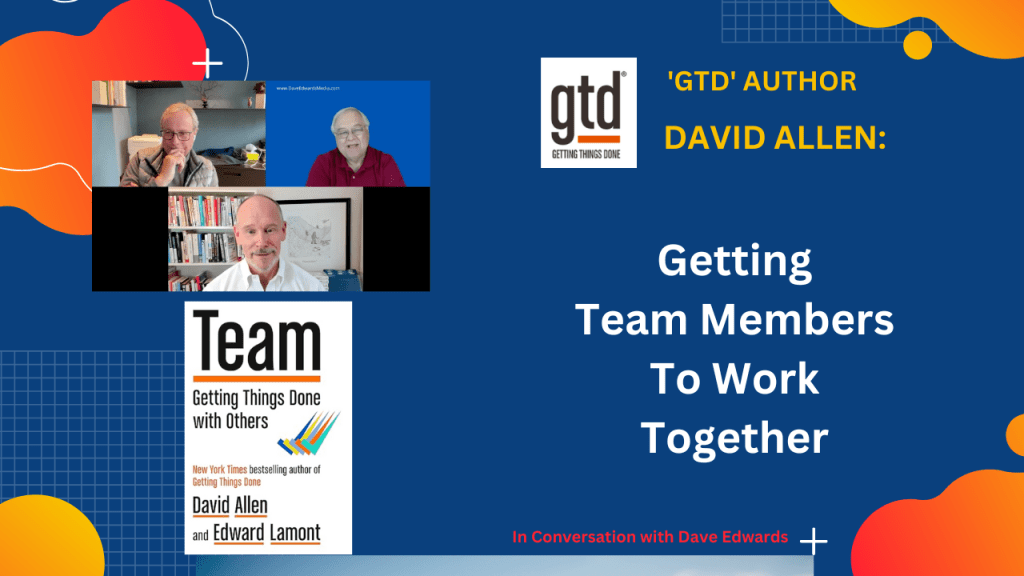
Why do so many teams fail, even with strong leaders and smart people? David Allen and Edward Lamont share simple team-management habits that build trust, improve communication, and help remote teams work together more effectively.
GTD changed how millions think about work, but most people struggle to make it stick. My course, “Getting Things Done: An Implementation Guide” skips theory and shows you how to put GTD into daily use. You’ll learn clear, practical ways to implement GTD so it works in your real life. More information HERE.

Successful teams depend on more than strong leadership because clear communication, shared accountability, workplace culture, and team productivity systems all play a major role in long-term success while effective remote teams and hybrid teams need clear agreements, defined goals, meeting standards, and ongoing learning loops to improve collaboration and avoid confusion as leaders model team expectations instead of policing behavior and team members work together to build trust, improve performance, and create a healthy work environment that values productivity, employee engagement, work-life balance, and meaningful measures of success beyond profits alone.
- Strong team leadership requires leaders to support team agreements instead of controlling every action.
- Clear workplace communication helps remote teams and hybrid teams avoid confusion and improve collaboration.
- Team culture becomes stronger when employees help define expectations and work standards together.
- Successful team management depends on accountability from every team member, not just the leader.
- Productive meetings should start on time and follow clear workplace productivity standards.
- Effective team collaboration improves when organizations document decisions and lessons learned.
- Team productivity grows when goals, roles, and responsibilities are clearly defined from the start.
- High-performing teams use regular feedback and learning loops to improve communication and workflow.
- Workplace success should include employee fulfillment, work-life balance, and team engagement, not only profits.
- Millennials and Gen Z workers are pushing businesses to rethink leadership, workplace culture, and productivity goals.

team productivity, remote team management, workplace communication, team collaboration, leadership skills, hybrid teams, workplace culture, employee engagement, team accountability, effective meetings, team leadership, project management, business communication, team performance, workplace productivity, communication skills, remote work strategies, leadership development, team building, organizational culture, meeting management, work-life balance, productivity systems, employee collaboration, team success metrics


Leave a Reply