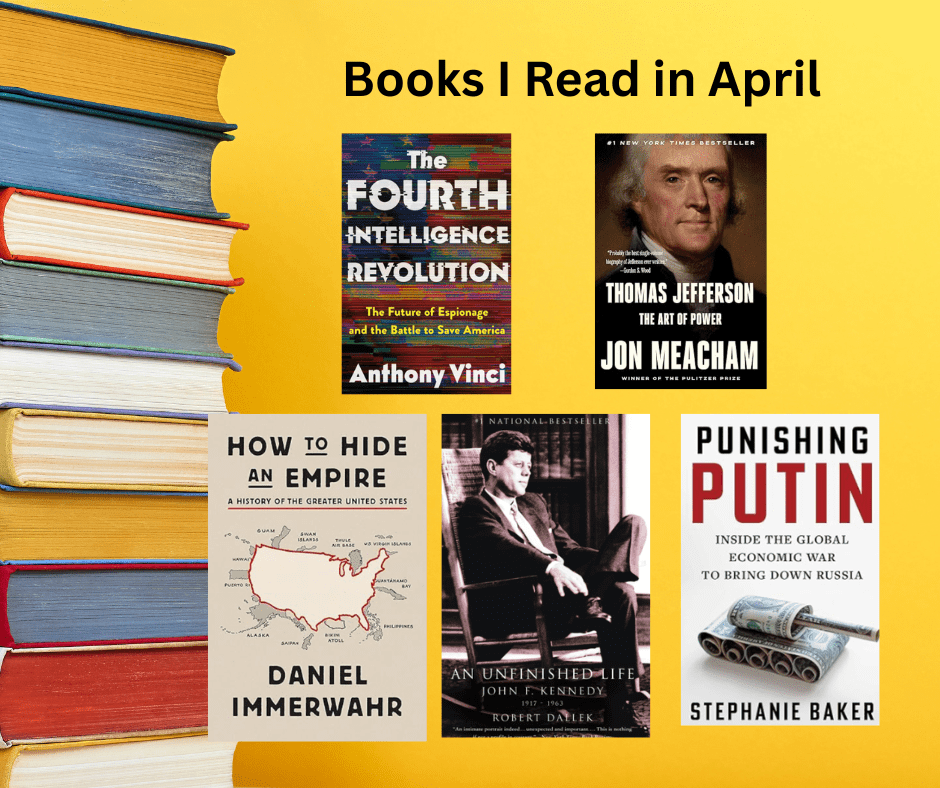
This month, I continued my journey of reading about American Presidents and key figures in our nation’s development. The biography of JFK was one of the best. But the book about our efforts to clamp down on Russia and Vladimir Putin was a fascinating look at how difficult it is to impact another nation despite our best efforts.
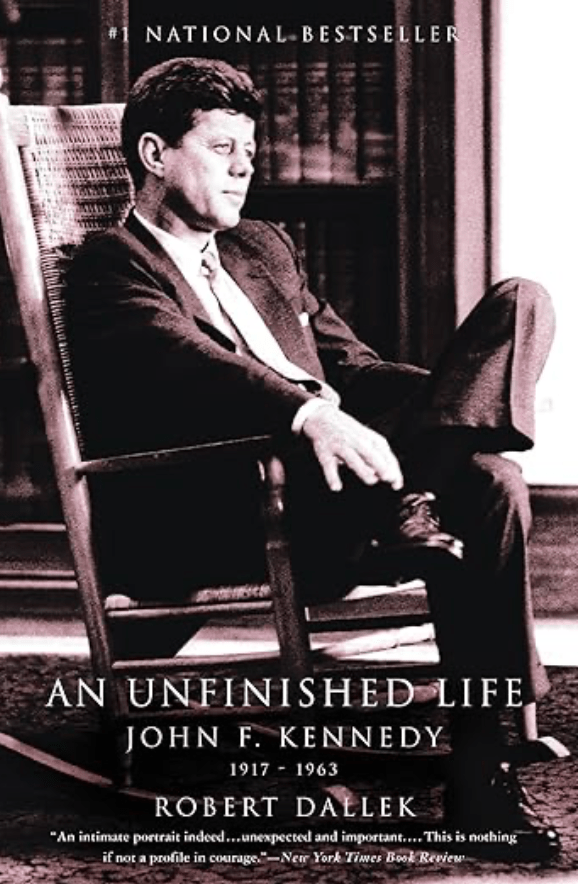
Historian Robert Dallek should be commissioned to write a book about every American president. “An Unfinished Life: John F. Kennedy” is one of the best books about the 35th president. He used documents and Oval Office tapes to share information not previously known. For example, the documents share more details about the accident that killed Joseph Kennedy Jr in World War II, “how Bobby Kennedy became attorney general in 1960, and what JFK thought of U.S. military chiefs, their plans for an invasion of Cuba, the American press corps in Saigon, and the wisdom of an expanded war in Vietnam.
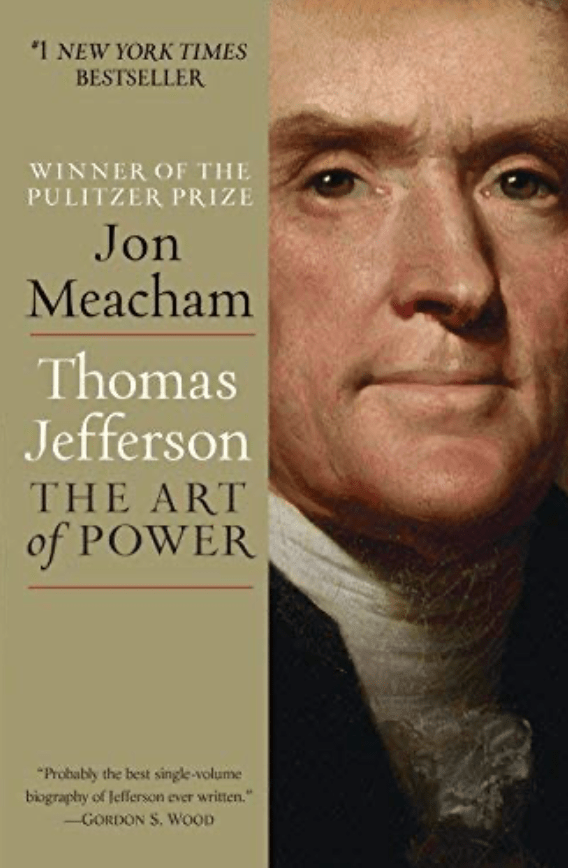
Thomas Jefferson rose to power by blending strong ideas with careful political skill. He believed educated citizens should guide the nation and protect liberty. John Meacham’s book, “Thomas Jefferson: The Art of Power,” shows how, during the years before independence, he helped turn colonial anger into a shared cause rooted in rights. His work on the Declaration expressed simple ideas about equality, freedom, and self-rule. He aimed to unite people by making complex issues easy to understand.
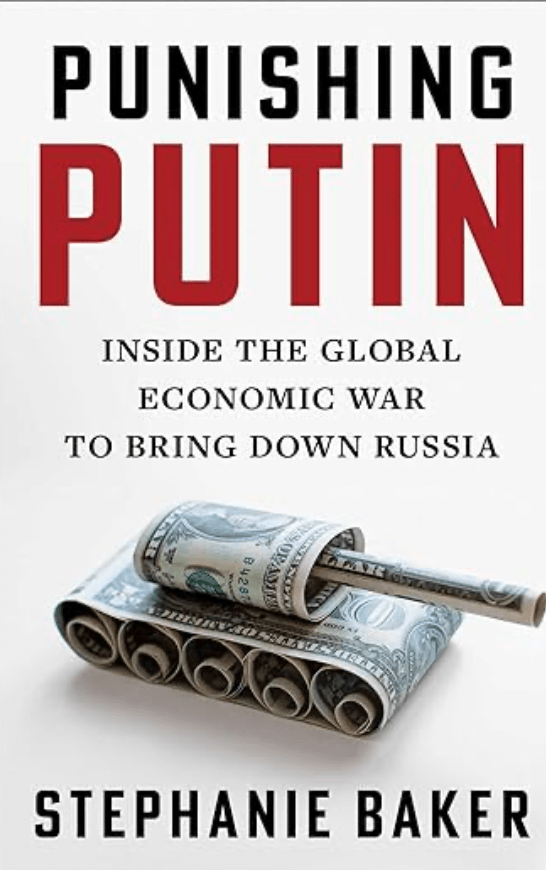
For decades, we have been hearing about efforts on the part of the US government to penalize Russian President Vladimir Putin for various actions he has taken, including the invasion of Ukraine. The book, “Punishing Putin: Inside The Global Economic War To Bring Down Russia,” by Bloomberg investigative reporter Stephanie Baker, describes how those efforts were designed and their impact.
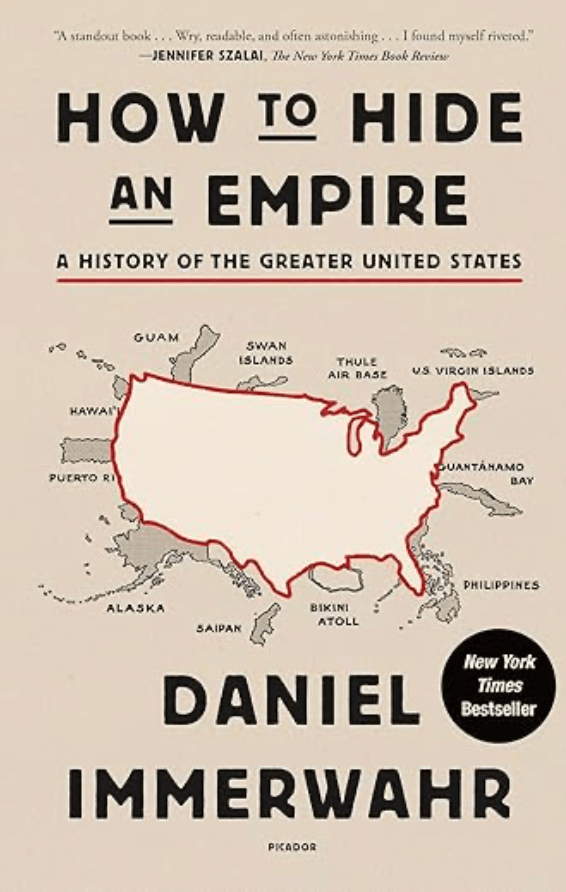
The book “How to Hide an Empire: A History of the Greater United States,” by Daniel Immerwahr, shows how the United States expanded beyond its mainland in ways many people overlook. He begins with a ‘logo map,’ the familiar map of the forty-eight contiguous states that shows neither Alaska, Hawaii, nor the many overseas territories that were home to 155 million people at the end of World War II. Immerwahr says this illustrates a myth that the US doesn’t behave like an empire. The book explores the hidden history of American imperialism.
National security threats have grown more complex due to global tensions and rapid tech change. Anthony Vinci argues that U.S. intelligence must adapt and lead to counter these risks. His book, The Fourth Intelligence Revolution, traces the history of spy agencies and examines the impact of modern technology. It also, more controversially, suggests that everyday citizens should support intelligence efforts.
I remember more when I take notes. That’s why I started writing summaries of the books I’ve read. Perhaps you might find them helpful. You can see a list of the books I’ve read in the last couple of years, along with links to my summaries, on my Book Notes page.