I have always been rather bad at predicting how long my work will take. I don’t think anyone is completely free of this problem.
When I look at a task, I tell myself that it shouldn’t take more than an hour. I then begin to work on it and, before I realize it, two hours have gone by. There is still some work left to do.
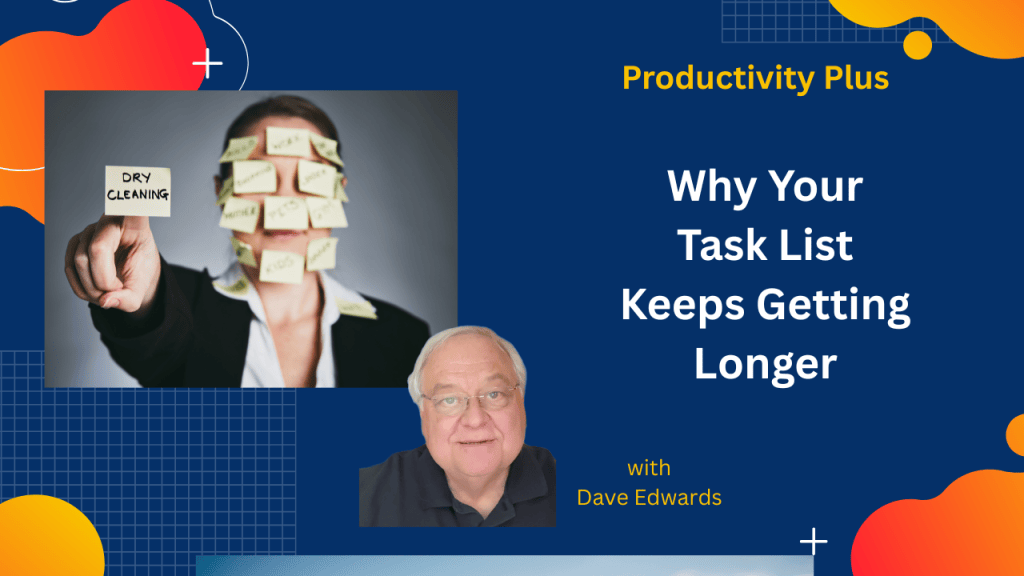
It’s not easy for the average person to manage in completing all the items on their daily list, since one thing tends to be put off until tomorrow.
The problems begin when we regard our estimates as if they were facts.
Give Yourself More Time
My first suggestion is simple: Take your first estimate and double it.
If you think something will take 30 minutes, plan for an hour. If you think it will take an hour, give yourself two.
That does sound like a lot. However, I prefer to finish early rather than spend the rest of the day falling behind.
If you overestimate the time needed, you will have some time left. You can then take a break, begin work on tomorrow’s tasks early, or enjoy the fact that you’ve finished something sooner than planned.
When you underestimate, the day feels different. You’re rushing. You’re trying to squeeze more work into less time. And you’re frustrated when the clock runs out.
That’s not a great way to do quality work.
What if you don’t have two hours?
This is where the advice becomes difficult.
If you think a task will take an hour, doubling it means finding two hours on your calendar. That’s not always easy.
Meetings interfere. There’s something that clients need. A colleague has a question. Your boss emails you. In that moment the two hours you had originally planned are gone.
So I’ve found another way to approach my task list.
Give Yourself Permission to Stop
Instead of writing:
Write this week’s newsletter.
I might write:
Start working on this week’s newsletter.
The small change has a big effect.
I can sit down and write for an hour. If I have more time, I can keep going. If I don’t, I can stop without feeling as though I have failed.
Then I change the task to:
Continue working on this week’s newsletter.
That’s the task for tomorrow.
I haven’t failed to finish. I’ve made progress. I’ve also clarified what I need to do next.
Look for a Natural Place to Stop
This works especially well with larger projects.
Take a newsletter article like this. I’ll choose a topic, write a draft, add examples, edit the piece, and get it ready to send.
That’s a lot of work for one sitting.
Instead, I can break it up:
- Today, I’ll choose the topic and begin the draft.
- Tomorrow, I’ll continue the draft.
- The next day, I’ll edit and finish it.
The same idea works for reports, presentations, research, and just about any other project.
When you reach the end of your planned work time, ask yourself:
Where’s a natural place to stop?
Then schedule the next step.
Don’t Turn Your Task List Into a Guilt List
This is the most important part.
A task list should help you manage your work. It shouldn’t make you feel bad about yourself.
If you move a task to tomorrow, that doesn’t mean you’ve had a bad day. Maybe the task took longer than expected. Maybe something else came up. Maybe you needed a break.
That happens.
I’m underestimating how long my work will take. But I’ve learned that I don’t have to finish everything today.
I can give myself more time. I can break large tasks into smaller steps. And I can use “begin” and “continue” to keep moving forward.
The goal isn’t to finish every task on your list. It’s to make steady progress on the work that matters.
And when you don’t finish everything, remember there’s always tomorrow.
If you are seeking to improve your level of productivity, check out my online course, “Pathway to Productivity and Better Time Management“


Leave a Reply