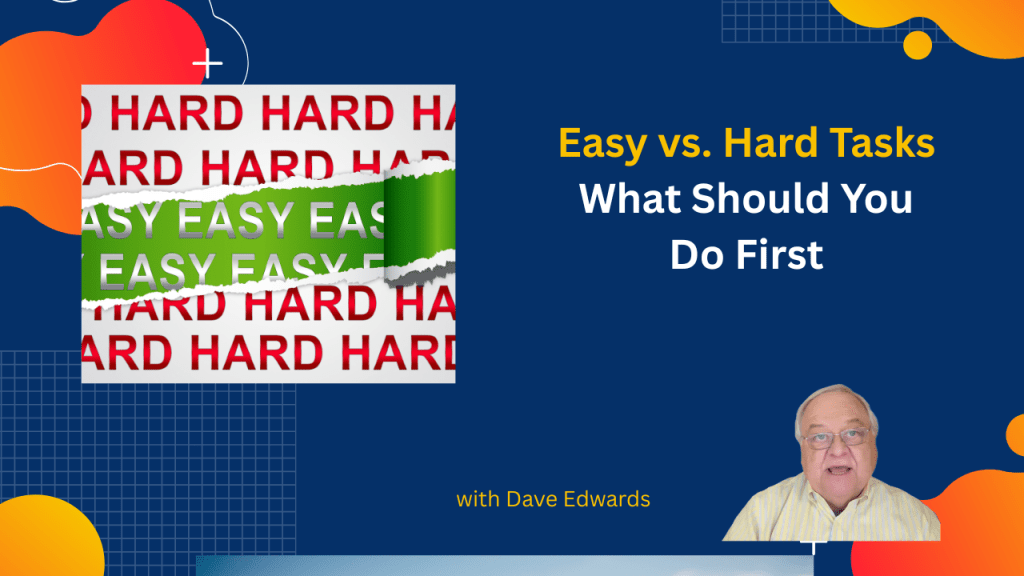
When your to-do list is packed, what do you pick first? Do you start with something easy or begin with the most difficult project? I’ve faced that choice many times. You probably have too.
Research by Maryam Kouchaki shows it’s common.
In the short run, this works. You finish more tasks. You feel less stress. You tell yourself you had a good day. That sense of progress feels real. But the story does not end there.
Over time, always picking easy work hurts you. Hard tasks help you grow professionally. When you avoid them, growth slows down. You may look busy, but you are not improving, and you are avoiding important things that need to get done eventually.
The research team studied doctors in a busy emergency room. They reviewed data from 84 doctors and over 200,000 patients. When doctors had more patients already in care, they chose easier cases. Each additional patient increased the chance of selecting a simpler case.
Doctors who had already done more work that shift also leaned toward easier cases. Fatigue played a role. So did the need to feel progress. When you are tired, hard problems feel heavier.
In the short term, doctors who picked easier cases saw more patients. They moved people through the system faster. It felt productive. Yet the long-term results told a deeper story.
Doctors who handled tougher cases got faster over time. Their service time dropped more sharply. They created more value per patient later. The hard work paid off. Skill grew through challenge.
A second study tested this idea in a lab task. Some people worked under a heavy load. Others had a lighter load. Afterward, they chose between an easy task and a harder one. Most people under heavy load picked the easy option.
Two feelings shaped that choice — low progress and high fatigue. Stress did not seem to drive it. When people felt tired or stuck, they reached for simple wins.
I see this in my own work. When I write, I sometimes answer emails first. It feels good to clear small items. But the real growth comes from tackling the tough draft. That is where learning lives.
So what should you do? Do not ignore easy tasks. They still matter. But do not let them crowd out the hard ones. Plan your day carefully. Break big projects into small steps.
Those bigger tasks won’t go away.