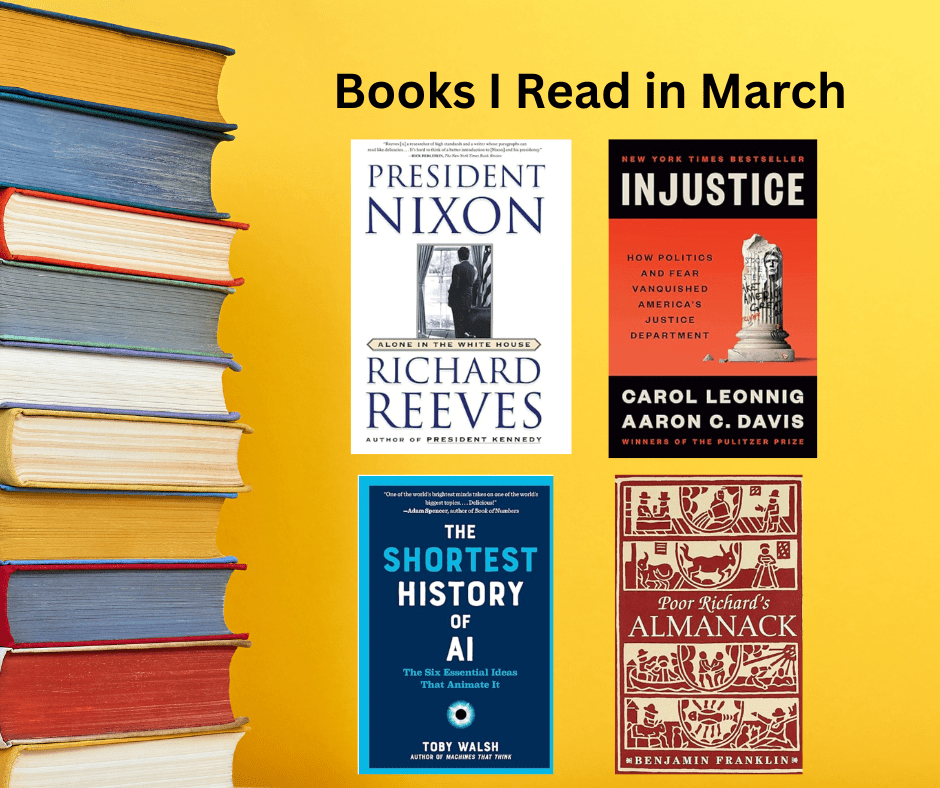
I’ve been interested in reading as many books as I can about American Presidents. I read about two American Presidents this month. Both were interesting for very different reasons. I also enjoyed a background book on the development of artificial intelligence and a fun book of Benjamin Franklin’s sayings.
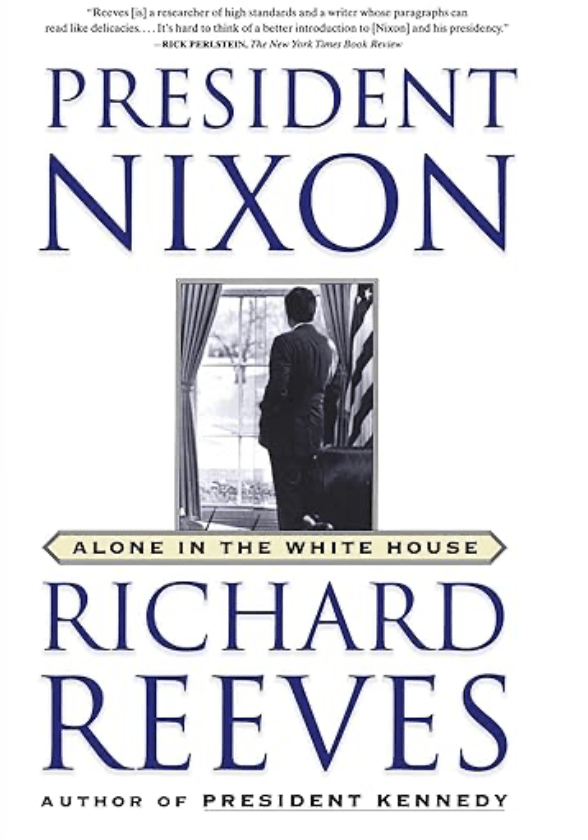
“President Nixon: Alone In The White House” is usually found on must-read lists about American Presidents. Of all the ones I’ve read, this one was my favorite.
We all know about the infamous tapes that Nixon made while in office. Richard Reeve’s book explains how extensive a record the Nixon administration made during its time in office. Memos reporting on what occurred in meetings were collected daily from Nixon’s staffers. Some of his aides kept diaries. As the author suggests, no other president is likely to keep such an accurate record of things that happened during his presidency. Nixon wanted control over both information and how history would judge him. Read my full summary here.
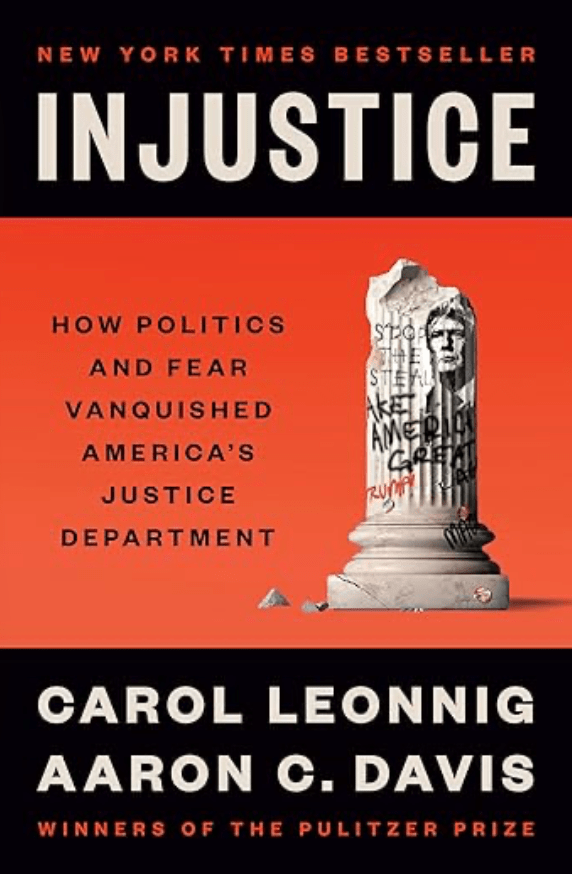
The book Injustice by reporters Carol Leonnig and Aaron C. Davis tells the story inside the US Justice Department during Donald Trump’s first term in the White House, how Joe Biden’s administration handled investigations, and how things changed dramatically at the beginning of Trump’s second term. The authors describe years of sharp conflict, fear, and deep strain inside a key public agency. Their account follows efforts to hold a former president responsible for handling secret records. Once Trump was reelected, prosecutors then dropped the charges because the Constitution bars trials of sitting presidents. Staff inside the Justice Department worried about their future roles. Trump decided to fire lawyers who had worked on the investigations. He also chose loyal allies for key law enforcement posts. New leaders promised a department that would follow the president’s direction. For many career officials, that shift raised deep concern about the agency’s long-held independence. We are left with the lesson that laws matter, but the people who enforce them shape their power every day.
This is an important book for our times. Read my full summary here.
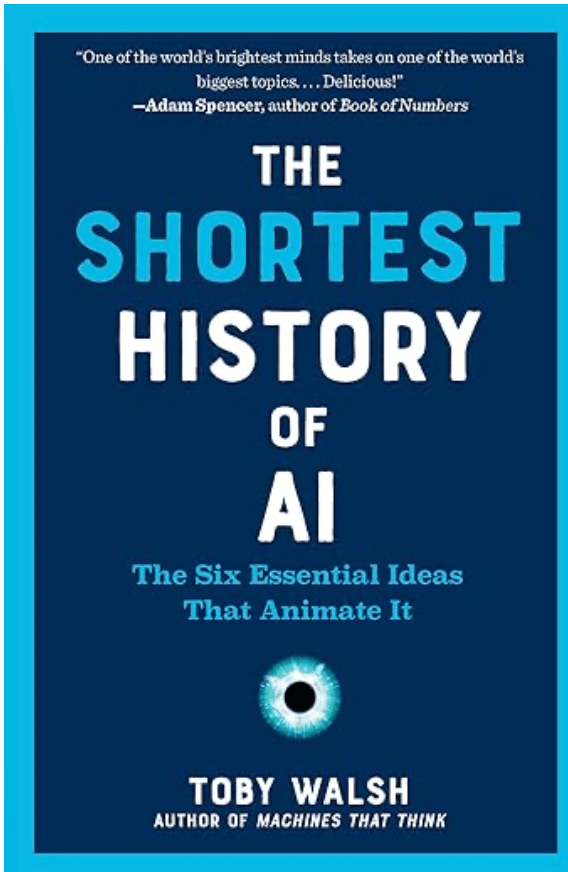
Artificial intelligence is around us every day. It’s not going away. But don’t worry, it can’t think, and it is not about to do away with its human inventors. Toby Walsh’s book, “The Shortest History of AI,” traces its development, explains how it works, and outlines its future trajectory.
AI went through cycles of hype and disappointment. Early excitement led to funding. But progress was slow because it was difficult to integrate human judgment with the rules that computers need. AI feels smart, the author writes, but it does not understand the way we do. It can’t navigate the world the way our brain can. Read my full summary here.
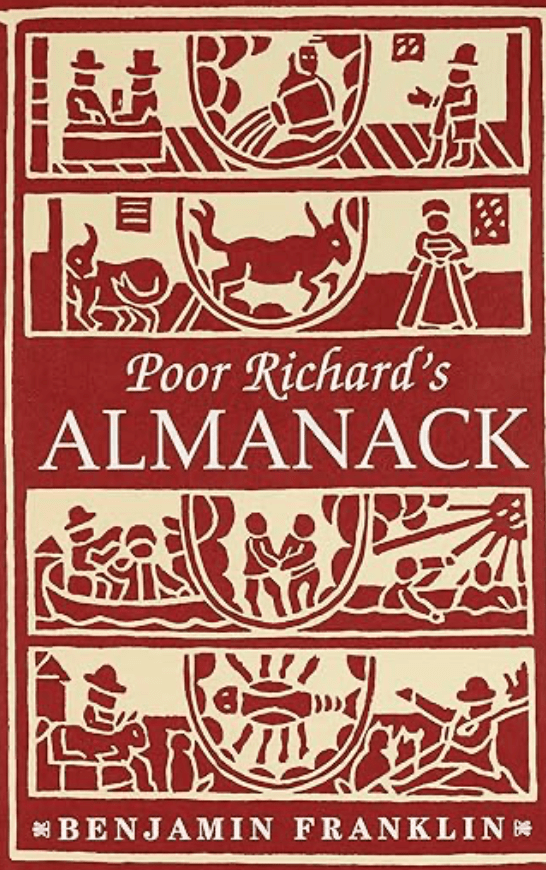
Every year from 1732 to 1758, Benjamin Franklin published an almanack under the pseudonyms “Poor Richard” or “Richard Sanders”. It contained everything from weather forecasts and astronomical data to witty proverbs that became very popular throughout Colonial America.
His most popular sayings, ranging from thrift, industry, and wisdom, are captured in the book, “Poor Richard’s Almanack. For people like me who like to collect interesting quotes, this book is a goldmine and fun to read.
I remember more when I take notes. That’s why I started writing summaries of the books I’ve read. Perhaps you might find them helpful. You can see a list of the books I’ve read in the last couple of years and links to my summary on my Book Notes page.