
Book Summary
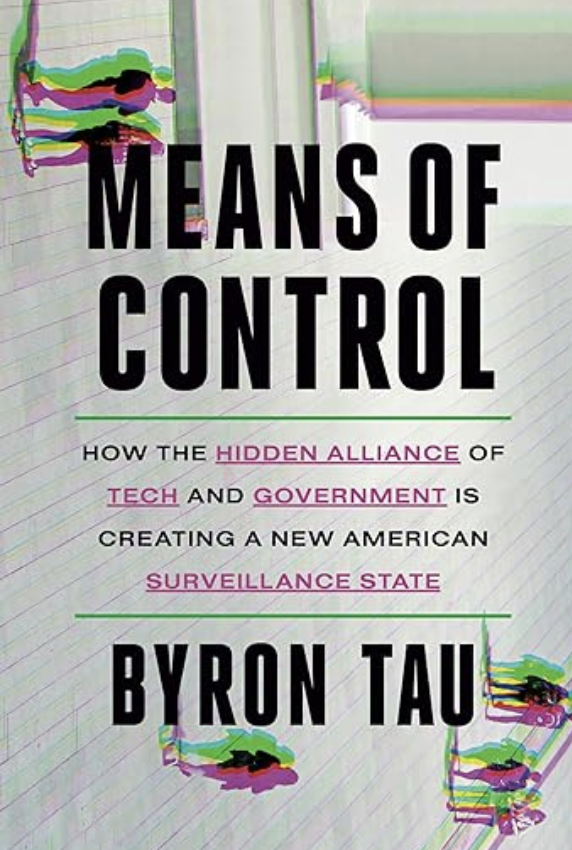
Means of Control: How the Hidden Alliance of Tech and Government Is Creating a New American Surveillance State
by Byron Tau
2024 – Crown – 400 pages
DAVE’S SUMMARY
Some time ago, I witnessed a demonstration that showed real-time data on a map, revealing the exact location of cars on the road and the radio stations their drivers were listening to. It was both fascinating and a little unsettling. Surprisingly, this level of data collection was just the beginning of what is possible.
The book, “Means of Control: How the Hidden Alliance of Tech and Government Is Creating a New American Surveillance State” by Byron Tau, explores the covert and intricate relationship between major tech companies and the U.S. government in establishing a pervasive surveillance network. This network, initially developed for use in counterterrorism efforts abroad, has gradually extended its reach to domestic soil, largely unnoticed by the general public.
Central to this surveillance system is the collection and analysis of vast amounts of data generated by individuals through their daily use of smartphones, apps, and digital platforms. Corporations such as Apple and Google assign unique advertising IDs to users, which track everything from geographic locations to browsing habits. This data, which is anonymized in name only, can be—and often is—purchased by the government from commercial data brokers. The data is then used to monitor and analyze consumer behavior, often without the user’s explicit consent or awareness.
The book also sheds light on the role of data brokers—entities that have been evolving since the 1960s—from collecting basic consumer information to today’s highly sophisticated data ecosystems that include social media, location tracking, and niche datasets. These brokers not only cater to corporate demands but also increasingly fulfill governmental needs, blurring the lines between private sector data collection and state surveillance.
Through historical references and modern-day examples, Tau illustrates how this alliance between tech and government agencies bypasses traditional legal safeguards meant to protect citizen privacy. He delves into the implications of metadata collection, open-source intelligence, and the role of social media in this new surveillance landscape. The book paints a concerning picture of a society where every digital interaction could potentially be monitored, analyzed, and exploited by those with access to the data.
Five Takeaways
1. The Covert Collection of Advertising Data: The U.S. government funds and utilizes data collected through commercial advertising channels, initially for counterterrorism but increasingly for domestic surveillance. The data is “anonymized” but easily de-anonymized to track individuals’ movements and behaviors.
2. The Rise of Data Brokers: Since the 1960s, data brokers have evolved from collecting basic demographic information to amassing detailed profiles through social media, location tracking, and niche datasets. These brokers serve both corporate and governmental interests.
3. Geolocation as a Surveillance Tool: Location data from smartphones is highly valuable and is used by both businesses and governments to track movements, analyze consumer behavior, and even plan law enforcement operations.
4. The Illusion of Anonymity: Despite claims of anonymization, the data collected from digital devices, particularly through apps and social media, can easily reveal personal identities and locations. This information is often used without the user’s knowledge.
5. Metadata’s Power: The book highlights the extensive use of metadata, such as phone records and social media activity, by intelligence agencies to conduct surveillance. Metadata, though not protected under the Fourth Amendment, can provide detailed insights into an individual’s life.
We share our data everyday whether we want to or not. But this book illustrates how this leads to constant surveillance. The relationship between technology companies and government agencies, means that this data is stored and used. All of this operates happens largely without public scrutiny or oversight.
Favorite Excerpts
“…the technology embedded in our phones, our computers, our cars, and our homes is part of a vast ecosystem of data collection and analysis primarily aimed at understanding and in some cases manipulating our consumer behavior.”
“During World War II, U.S. census data—collected under promises of confidentiality—was used to identify and round up Japanese Americans for internment. Such a turn of events might strike you as unthinkable in the twenty-first century. But once-unimaginable scenarios have been occurring with frequency now in our polarized politics. What’s stopping history from repeating itself?”
“This book aims to remind everyone that in our role as both consumers and voters, we Americans still do have a say in what kind of society we want to build and live in. We have a choice in what we buy with our hard-earned money and whom we elect to represent us at all levels of government. And there are companies invested in building privacy into technology; there are business models other than advertising or data harvesting for consumer services and technologies.”
Purchase the book here and I will receive a small commission at no extra cost to you. But, by doing this, you help support my reading habit! Thanks.
 Dave Edwards Media